The heating's on, the boiler's firing, and yet one radiator feels warm along the top and cold at the bottom. Or it's the other way round. Or it's barely warm at all while the rest of the house is toasty.
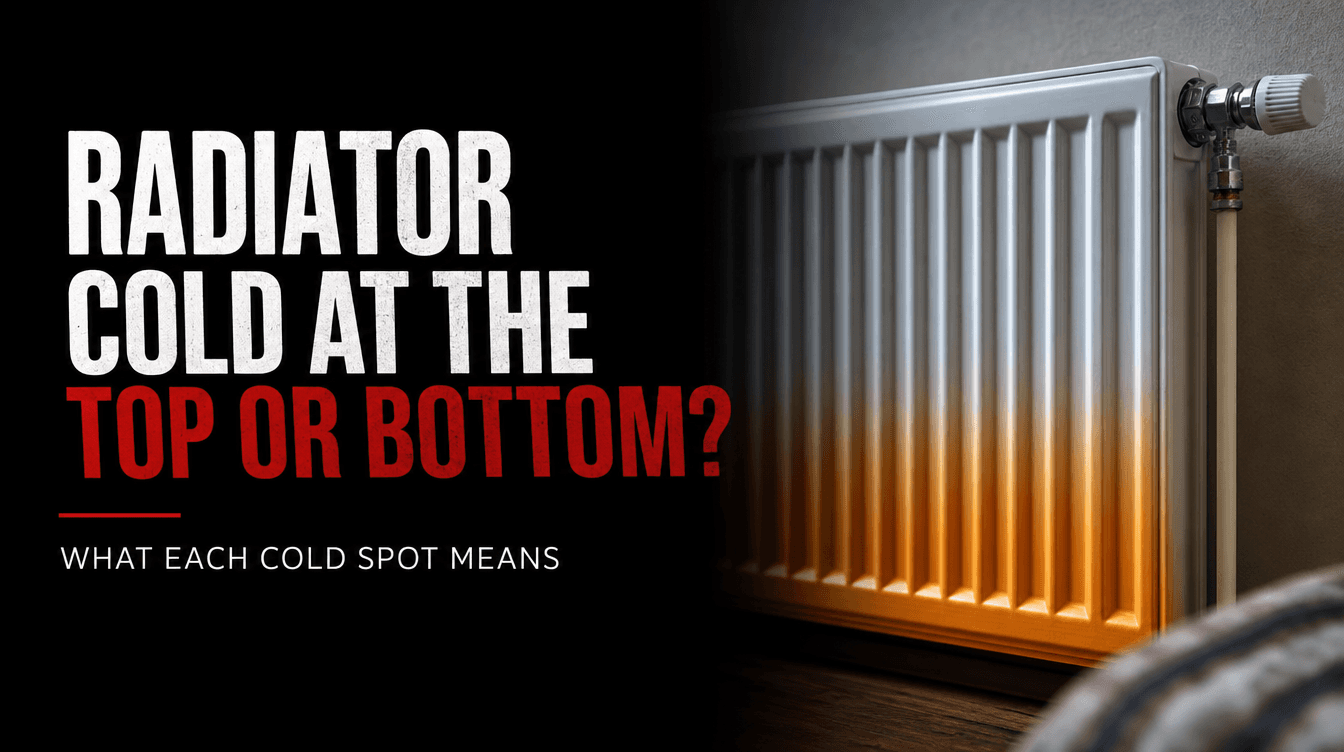
Here's the useful bit: where a radiator is cold is a strong clue to why. A radiator that's cold at the top almost always has air trapped inside it, and bleeding it will usually sort it in a few minutes. A radiator cold at the bottom but warm at the top usually points to sludge settling inside it, which bleeding won't touch. A radiator that's cold all over while the others are fine is most often a valve problem.
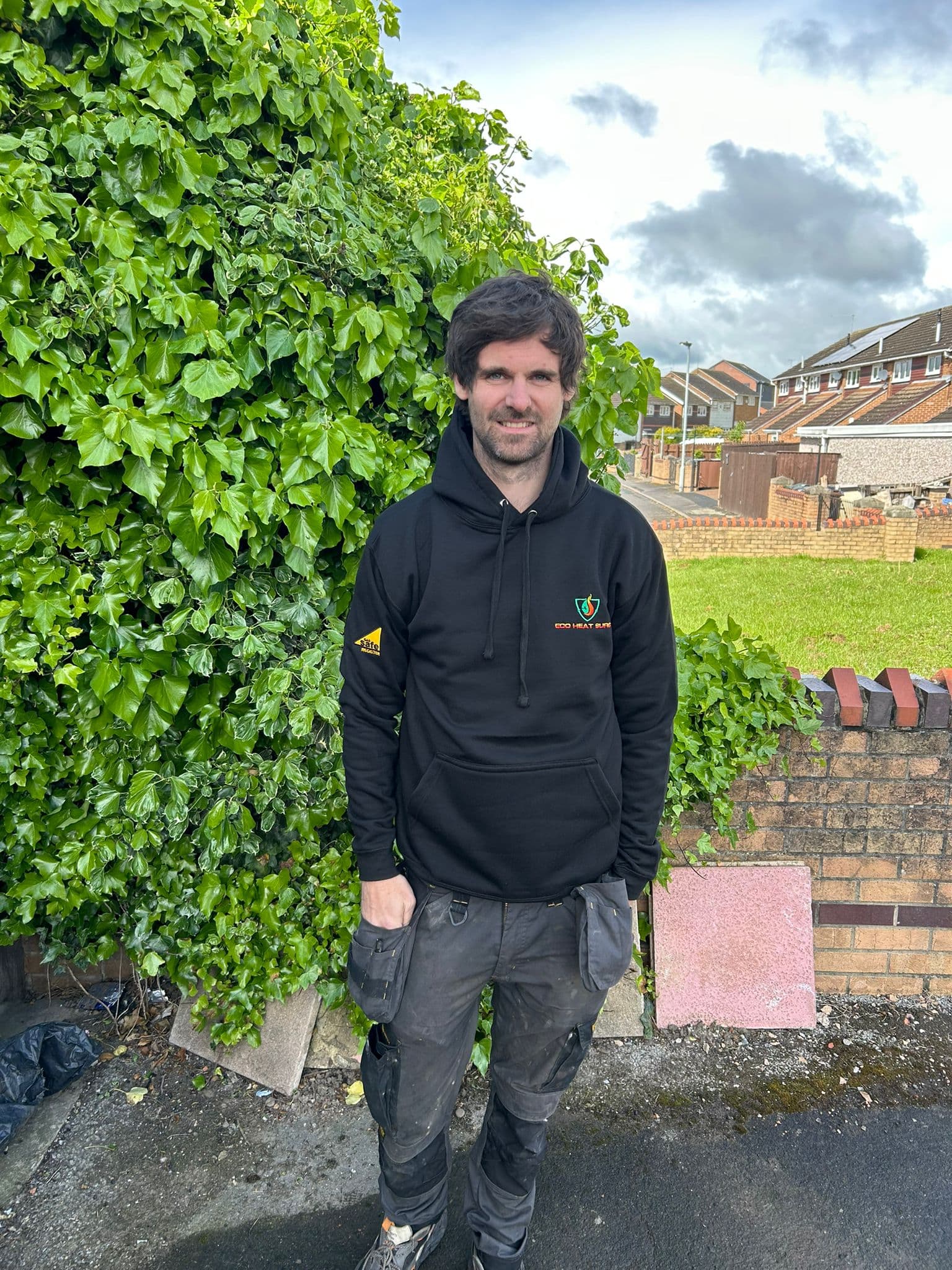
I'm Danny, and I co-own Eco Heat Surge with Adam. Cold spots in radiators are one of the three problems behind most of the central heating calls we get across Barnsley and South Yorkshire, so I've written this to help you work out which one you've got, what's safe to try yourself, and when it's worth getting one of us out.
Check the pattern first
Put the heating on and give it twenty minutes or so to get going. Then carefully run your hand up each radiator from bottom to top, and along it from one end to the other. Go gently, because a working radiator can be too hot to hold your hand on.
Hot water fills a radiator evenly when everything's working, so any area that stays cooler than the rest is telling you something. Ideal Heating makes the same point in its guide to bleeding radiators: if the panel gets cooler the higher up you feel, there's air in it.
| What you feel | Most likely cause | Can you sort it yourself? |
|---|---|---|
| Cold at the top, warm below | Trapped air | Usually, by bleeding it |
| Cold at the bottom, warm at the top | Sludge (magnetite) settled inside | No, it needs testing and cleaning |
| Cold all over, other radiators fine | Stuck TRV pin or a closed valve | Sometimes, with a quick valve check |
| Hot near the pipe, cool at the far end | Poor flow, or the TRV doing its job | Check the TRV setting first |
| Upstairs cold, downstairs fine | Air, low pressure or a zone valve | Partly (bleed and check pressure) |
| Every radiator cold | Boiler, controls or pressure | Check controls, then call us |
The sections below take each one in turn.
Radiator cold at the top: trapped air
This is the one you'll meet most often, and the one you can nearly always fix without help. Air gets into a heating system over time and, being lighter than water, it rises to the highest point it can reach: the top of your radiators. The water can't fill that space, so the top of the panel stays cold.
The fix is to let the air out through the bleed valve, the small square fitting at one of the top corners. You'll need a radiator key, which any DIY shop or hardware counter sells.
How to bleed a radiator safely
- Turn the heating off and let it cool. You've already found the cold spot, so switch everything off before you open anything. Water that escapes from a hot radiator can scald.
- Protect the floor and wall. Tuck an old towel under the valve end and hold a cloth or small tub under the bleed valve. The water that comes out is often darker than you'd expect.
- Open the valve a little. Fit the key and turn it anticlockwise by a quarter turn or so. You don't need more than that, and you should never take the bleed screw right out.
- Let the air hiss out. You'll hear it escaping. Keep hold of the key.
- Close it when water appears. Once air stops and a steady dribble of water comes out, turn the key clockwise until it's snug. Don't force it.
- Check the boiler pressure. Letting air out also lets out a little pressure. Look at the gauge on your boiler and, if it's dropped below the level in your manual, top it up following the manufacturer's instructions.
If you're bleeding several radiators, start downstairs and work your way up, finishing with the one furthest from the boiler. Then put the heating back on and feel the radiator again once it's warm.
When bleeding keeps being needed
Bleeding once in a while is normal, particularly after a summer off. If the same radiator fills with air again every few weeks, though, something is feeding air or gas into the system. That can be a small leak drawing air in, or corrosion going on inside the radiators and pipes. Either way it's worth an engineer looking, because repeated bleeding only treats the symptom.
Radiator cold at the bottom: usually sludge
This is the reverse pattern, and bleeding won't help it. Over the years, the water in a heating system corrodes the inside of steel radiators and pipes. The rust forms a dark sludge called magnetite, which is heavy, so it drops to the bottom of each radiator and packs down there. Hot water can't get through it, and the lower part of the panel stays cold.
A few other clues tend to come with it: very dark water when you bleed, a boiler that's become noisier, or rooms that take longer to warm than they used to.
The proper fix is to clean the system out, usually with a power flush, and then fit a magnetic filter so the problem doesn't creep back. We cover what's involved, and what it costs, in our guide to power flush costs in Barnsley. One thing to know first is that sludge isn't the only thing that makes a radiator run cool lower down, which is why we test the system before recommending a flush.
If a single old radiator is badly corroded or already weeping, replacing it can make more sense than cleaning it. A like-for-like radiator swap with us is £120 for the first one and £80 for each extra on the same visit, labour only. All our radiator prices are on the pricing page.
Whole radiator cold while the others are warm
When one radiator stays stone cold from top to bottom and everything else is fine, hot water isn't getting into it at all. The cause is usually at the valves rather than inside the radiator.
A stuck TRV pin
A thermostatic radiator valve (TRV) is the valve with a numbered head. The Energy Saving Trust explains that a TRV works by controlling how much hot water flows into its radiator, letting more through as the room cools. Underneath the head is a small metal pin that moves in and out to open and close the valve.
After months of not being used, that pin can seize in the closed position. It's a classic first-cold-snap problem.
To check it:
- Turn the TRV head up to its highest number and wait a while. If the radiator warms, the pin was just sitting closed.
- If it doesn't, turn the heating off, then unscrew the head. Many twist off by hand at the collar. If yours needs a tool or won't shift, leave it for an engineer.
- Look for the pin in the middle of the valve body. Press it gently. It should move down and spring back up.
- If it's stuck down, a gentle wiggle with your fingers often frees it. Don't lever or hammer it.
- Screw the head back on, set it to your usual number and put the heating back on.
If there's any sign of water around the pin, stop there and call us. The seal on the pin can wear, and that's a job for an engineer.
A closed lockshield valve
At the other end of the radiator there's usually a second valve under a plain plastic cap. That's the lockshield. It's set when the system is balanced and normally shouldn't need touching.
It often gets shut off when a radiator is taken down for decorating and then forgotten. If you know that's happened, opening it back up by roughly the number of turns it was closed will usually bring the radiator back. If you don't know how far it was open before, leave it to us, because it affects how heat is shared around the whole house.
Hot near the pipe, cool at the far end
If a radiator is hot at the end where the pipe comes in and cooler towards the other end, check the TRV setting before anything else. As a room gets close to the temperature the TRV is set for, the valve cuts the flow back, and the far end naturally cools first. That's the valve doing its job, not a fault.
If the radiator behaves like this from cold with the TRV turned right up, the flow through it is too low. That could be a part-closed valve, sludge starting to build up, or a system that needs balancing, where the lockshields are adjusted so each radiator gets its fair share of hot water. We balance systems as part of our central heating service in Barnsley.
Upstairs radiators cold, downstairs fine
When it's floor by floor rather than radiator by radiator, look at three things.
- Air. Air collects at the highest points in the system, so upstairs radiators suffer most. Bleed them as above.
- Boiler pressure. On a sealed system, low pressure can leave the upper radiators short of water. If your gauge keeps dropping, our guide to a boiler losing pressure explains why and what to check.
- Zone valves. Some homes with a system or regular boiler have separate upstairs and downstairs heating. If one floor never heats however you set the controls, a zone valve may have failed. That needs an engineer.
Every radiator is cold
If no radiator in the house is warming, the radiators themselves are rarely to blame. Check that the thermostat is set above the current room temperature, that the timer or programmer is calling for heat, and that the boiler pressure is in its normal range.
If all that looks right and the heating still won't come on, work through our checklist for a boiler that won't turn on. Opening the boiler casing is strictly for Gas Safe registered engineers, and you can confirm anyone who turns up is on the Gas Safe Register.
Stopping cold spots coming back
A few habits go a long way:
- Run the heating briefly in late summer. Half an hour with the TRVs turned up helps stop pins sticking and shows up problems before you actually need the heat.
- Bleed once a season, not every week. If you're bleeding often, get it looked at.
- Keep an eye on the pressure gauge. A slow drop is an early warning.
- Have the system protected. A magnetic filter and the right level of inhibitor in the water slow down the corrosion that causes sludge. Both get checked at an annual service.
Still got a cold radiator?
If you've bled it, checked the TRV and the lockshield, and a radiator is still cold at the bottom, the top or all over, the cause is inside the system and needs the right tools to find. We'll test it properly and give you a fixed price in writing before any work starts.
Send us a message or ring 01226 885022, Monday to Friday between 8am and 5pm, and tell us which radiator is playing up and how it feels.
Frequently asked questions
Why is my radiator cold at the bottom but hot at the top?
That pattern usually means sludge has settled in the bottom of the radiator and is stopping hot water reaching the lower part. Bleeding won't fix it. The system needs testing and, if sludge is confirmed, cleaning out with a flush and protecting with a magnetic filter.
Why is my radiator cold at the top?
Air has collected in the top of the radiator, where the water can't reach. Turn the heating off, let it cool, then open the bleed valve with a radiator key until water appears. Check the boiler pressure afterwards, because bleeding lowers it a little.
Why is one radiator cold when the rest are hot?
The most common cause is the valve pin under the TRV head sticking closed, especially after the summer. A lockshield valve left shut after decorating is another. If freeing the pin and checking the lockshield doesn't bring it back, an engineer can track down the blockage.
Should I bleed radiators with the heating on or off?
Feel for cold spots with the heating on, then switch it off and let the radiator cool before you open the bleed valve. That keeps your hands clear of hot water and means the pump isn't pushing water round while the valve is open.
Do I need to top up the boiler after bleeding radiators?
Often, yes. Letting air out releases a little pressure too. Check the gauge afterwards and, if it has dropped below the level your boiler manual recommends, top it up following the manufacturer's instructions. If it keeps falling, ask an engineer to take a look.
Get more like this
One honest email a month.
Boiler tips, heat pump advice, and answers to the questions our customers actually ask.
Heating not quite right?