A boiler that will not turn on is one of the most stressful faults a home can throw at you, especially in the middle of winter with a cold house and everyone wanting a hot shower.
The good news is that a fair share of the no-heat callouts we attend come down to something simple you can check yourself in a few minutes. Before you call anyone out, it is worth working through the nine safe checks below, because one of them often gets the heating going again.
One rule comes before all of them. If you can smell gas, do not touch any electrical switches, open your windows and doors, leave the house, and call the National Gas Emergency Service on 0800 111 999.
You can read more about what to do on the National Gas emergencies page. Everything below is a safe check a homeowner can do without tools and without opening the boiler. Anything inside the casing is always a job for a Gas Safe registered engineer.
I am Danny, one of the two engineers who run Eco Heat Surge, and fault-finding is most of what I do. Here is the checklist I would talk a member of my own family through over the phone.
1. Check the thermostat and timer
Start with the obvious, because it is the obvious thing surprisingly often. Make sure your room thermostat is set higher than the current room temperature, and that the timer or programmer is switched to on rather than off or a holiday setting.
If you have a wireless thermostat, change its batteries, because flat batteries stop the thermostat telling the boiler to fire and it looks for all the world like a dead boiler. A knocked dial, or a clock that has reset itself after a power cut, catches people out all the time.
2. Make sure the boiler has power
A boiler with no electricity will not do anything, however healthy it is inside. Check the fused spur switch next to the boiler is on, and that nothing has been turned off by accident.
Then look at your consumer unit, the fuse board, in case a switch or an RCD has tripped, and reset it if so. If a fuse has actually blown, make a note of it, because something caused it and it may well go again.
3. Look at the pressure gauge
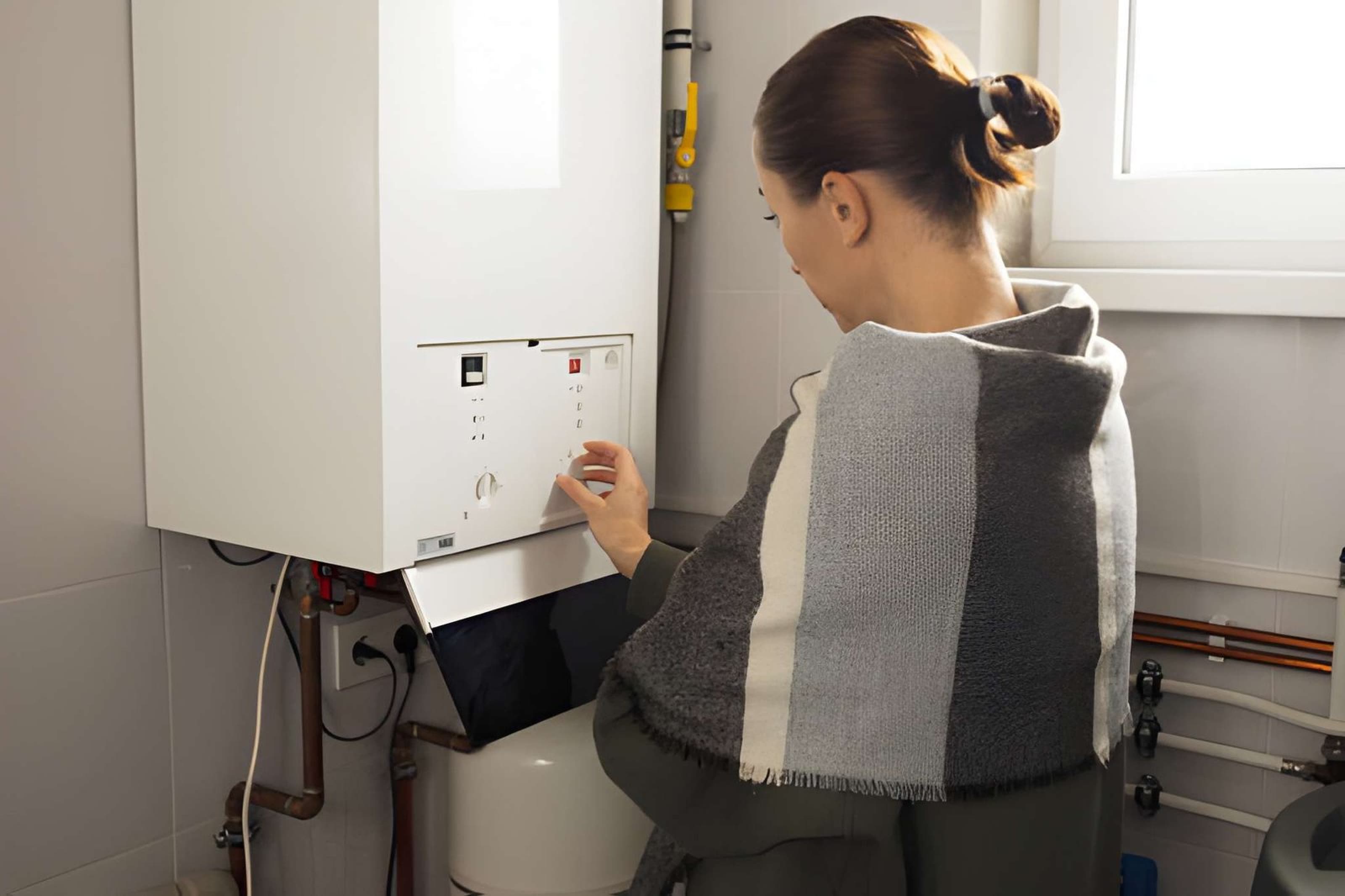
Find the pressure gauge on the front of the boiler. When the system is cold it should read somewhere around 1 to 1.5 bar. If the needle has dropped close to zero, low pressure will often lock the boiler out as a safety measure.
Topping the system back up is done through the filling loop, and if your boiler manual shows you how, you can do it carefully yourself. If you cannot find clear instructions, or the pressure keeps dropping, leave it to an engineer, because falling pressure usually means a small leak that needs tracing.
4. Try the reset button
Most modern boilers have a reset button, sometimes a flame symbol, that you press and hold for a few seconds. Follow whatever your manual says. If the boiler fires up and then locks out again, stop pressing it.
A boiler that keeps cutting out is telling you there is an underlying fault, and repeatedly resetting it can do more harm than good. That is the point to book an engineer rather than fight with it.
5. Check for a frozen condensate pipe
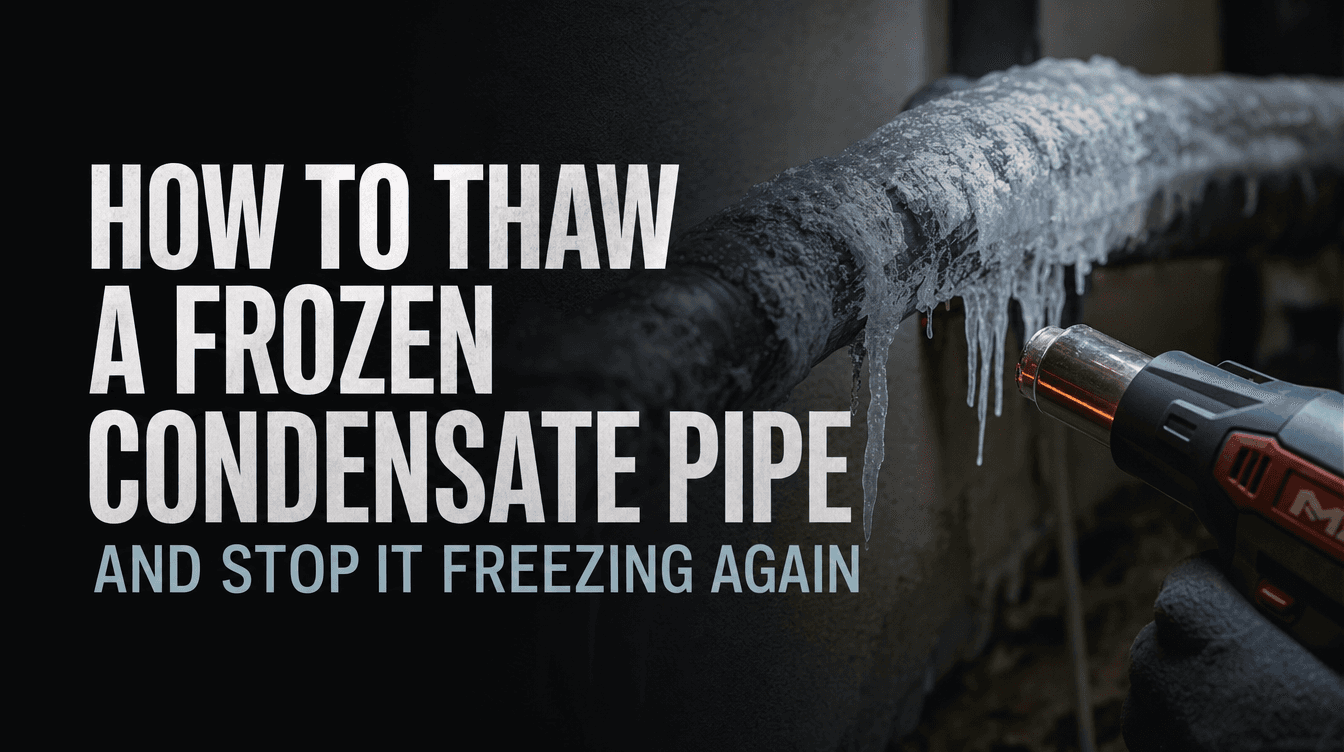
This is the single most common winter callout we get. Modern condensing boilers have a condensate pipe that carries acidic water outside, and in a cold snap that exposed external pipe can freeze and lock the boiler out, often with a particular fault code or a gurgling noise.
You can usually fix it yourself: pour warm, not boiling, water along the outside section of the pipe, or hold a wrapped hot water bottle against it, then reset the boiler. Insulating the pipe afterwards stops it happening again.
6. Check the pilot light on older boilers
If you have an older, non-condensing boiler, it may have a standing pilot light. If that small flame has gone out, you can relight it by following the instructions printed on the boiler itself.
If it will not stay lit, that points to a worn part and is a job for an engineer rather than something to keep relighting. Modern condensing boilers light electronically and have no pilot light, so you can skip this step if yours is newer.
7. Check your other gas appliances
Try your gas hob or gas fire. If none of your gas appliances are working, the problem may not be the boiler at all but your gas supply.
On a prepayment meter, check you are in credit and have not run through your emergency credit, and it is worth checking whether there is a wider local outage too. If only the boiler is dead while the rest of your gas is fine, then the fault sits with the boiler or its controls.
8. Look up the fault code
If your boiler has a digital display, note down any error or fault code exactly as it appears. Then check it against the manufacturer's fault-code list, which you can usually find on their website, such as the Ideal homeowner support pages.
Some codes clear themselves once the cause is dealt with, like the frozen pipe above. Others tell you a specific part has failed. Either way, the code is the quickest way for you and your engineer to know where to start.
9. Turn it off and on again, properly
It sounds too simple to matter, but a proper power cycle clears transient electronic glitches that a quick reset sometimes does not.
Switch the boiler off at the fused spur, wait a full minute, then switch it back on, and give it a moment to go through its start-up sequence before you judge whether it has worked.
If it still refuses to fire after this, you have done everything a homeowner safely can, and it is time to bring in an engineer.
When to stop and call an engineer straight away
Some signs mean you should not keep troubleshooting at all. Stop and get a Gas Safe engineer, or call the emergency line, if you smell gas, see black sooty marks or scorching around the boiler, notice the flame burning yellow or orange instead of a crisp blue, hear banging or whistling, or feel unwell with headaches or dizziness that ease when you leave the house.
Those last symptoms can point to carbon monoxide, which is exactly why a working CO alarm near your boiler is one of the cheapest and most important things in your home. You can check any engineer's registration on the Gas Safe Register before you let them in.
How to avoid a no-heat emergency next time
A few small habits head off most winter breakdowns. Book an annual service so small faults are caught before they strand you, ideally in late summer before engineers get busy.
Lag the external condensate pipe so it does not freeze. Keep half an eye on the pressure gauge and top it up if your manual allows. Change the wireless thermostat batteries once a year.
And do not ignore the early warning signs, like the boiler needing the odd reset or making new noises, because they rarely fix themselves and usually turn into a no-heat call on the coldest night.
If your boiler still won't turn on
If you have worked through all nine checks and your boiler still will not turn on, it needs a professional. Resist the urge to keep hitting reset, because a boiler that has locked itself out is usually protecting itself or you, and overriding that is not worth the risk. The fault could be anything from a failed ignition lead to a faulty pump or circuit board, none of which is a safe DIY repair.
This is where we come in. We offer same-day emergency callout across Barnsley, Sheffield, Rotherham and Doncaster, with honest diagnosis and a fixed price quoted before any work, and you can see all the areas we cover if you are not sure whether you are in range.
Many of the faults above are also caught early by a yearly boiler service, which is far cheaper than a breakdown on the coldest night of the year. If your boiler is cold and the checklist has run dry, get in touch and we will get you sorted.
Frequently asked questions
Why won't my boiler turn on?
A boiler that will not fire is often down to something simple: the thermostat or timer being off, a tripped fuse, low pressure, or a frozen condensate pipe in winter. Work through the safe checks first. If it still will not start, it needs a Gas Safe engineer to diagnose the fault.
How do I reset my boiler?
Most modern boilers have a reset button, often marked with a flame symbol, that you press and hold for a few seconds as the manual describes. If the boiler fires and then locks out again, do not keep resetting it. Repeated lockouts mean an underlying fault that needs an engineer.
Can a frozen pipe stop my boiler working?
Yes. In cold weather the external condensate pipe can freeze and lock the boiler out, usually with a fault code or a gurgling sound. You can thaw the outside pipe with warm, not boiling, water or a wrapped hot water bottle, then reset the boiler. Insulating the pipe helps prevent it.
Is it safe to try and fix my boiler myself?
Only the checks in this guide, which involve no tools and no opening of the boiler. Anything inside the casing, or anything to do with the gas itself, must be left to a Gas Safe registered engineer. If you ever smell gas, leave the house and call 0800 111 999 straight away.
How quickly can you attend a no-heat callout?
We offer same-day emergency callout across Barnsley, Sheffield, Rotherham and Doncaster wherever the schedule allows, with a realistic time given on the phone and a fixed price quoted before any work. Winter and weekend demand can stretch this to next day, but we will always be straight with you.
Get more like this
One honest email a month.
Boiler tips, heat pump advice, and answers to the questions our customers actually ask.