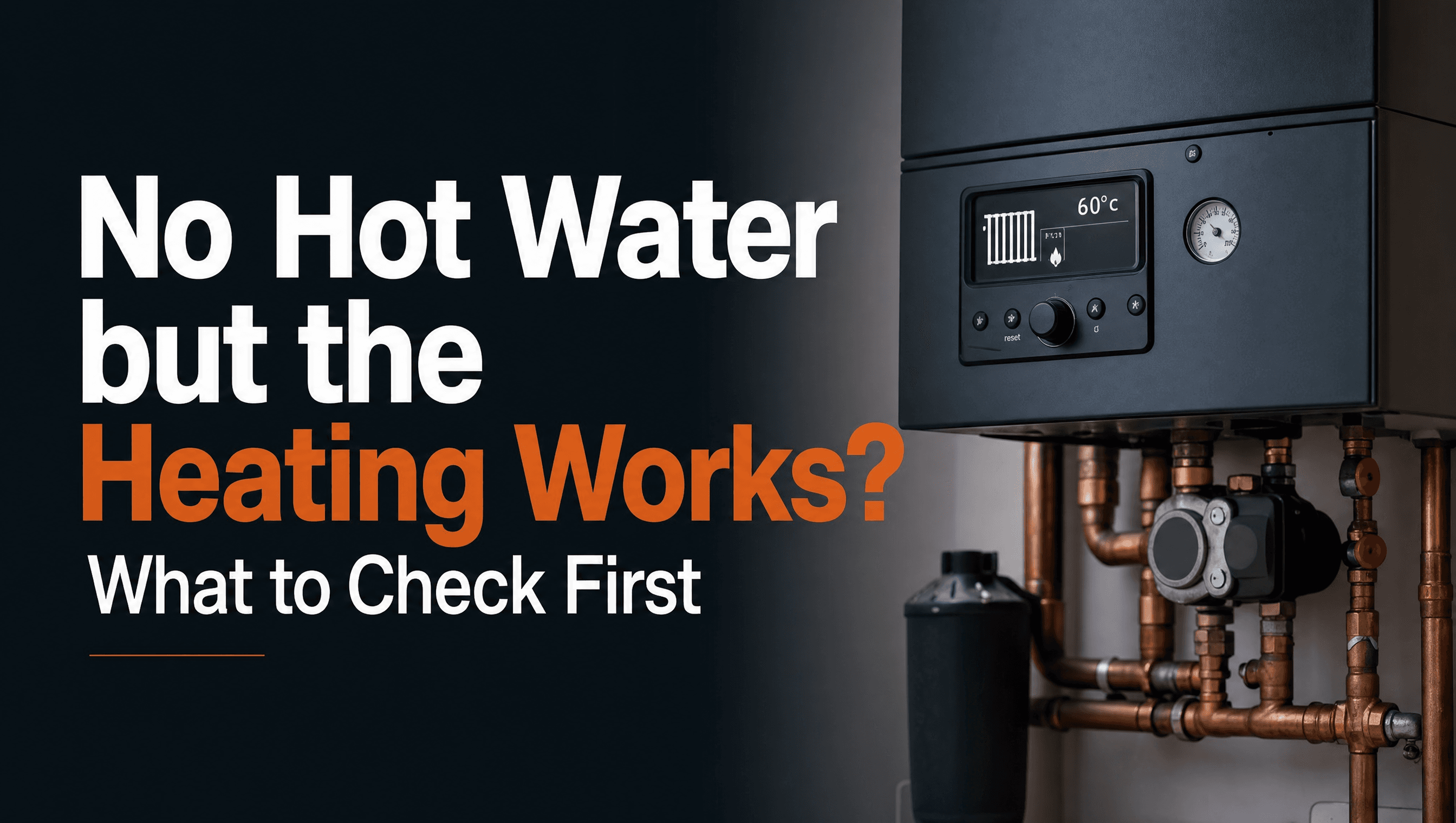
If some of your radiators warm up along the top but stay stubbornly cool lower down, or your boiler has started rumbling like a kettle, someone has probably suggested a power flush. The next question is always the same: what does it cost, and is it money well spent?
The short answer is that a full power flush with us costs from £495 including VAT in Barnsley, and from £550 for the larger rural properties out towards Penistone. That price covers the flush itself, fresh corrosion inhibitor, a magnetic filter and a flush certificate.
It's worth every penny when sludge really is the problem. When it isn't, it's money down the drain, which is why we test a system before we'll quote for one.
This is Danny. Adam and I own Eco Heat Surge and do the work ourselves. Power flushing is part of our central heating work across South Yorkshire, and this guide covers what you're paying for, the signs that point to sludge, the jobs where a flush is the wrong answer, and how to avoid paying for one twice.
What is a power flush?
The water in a wet central heating system goes round the same loop for years. Inside steel radiators, that water slowly corrodes the metal, and the rust that comes away turns into a fine black sludge called magnetite. It settles wherever the water moves slowest, which means the lower half of your radiators and the tight spots in the pipework.
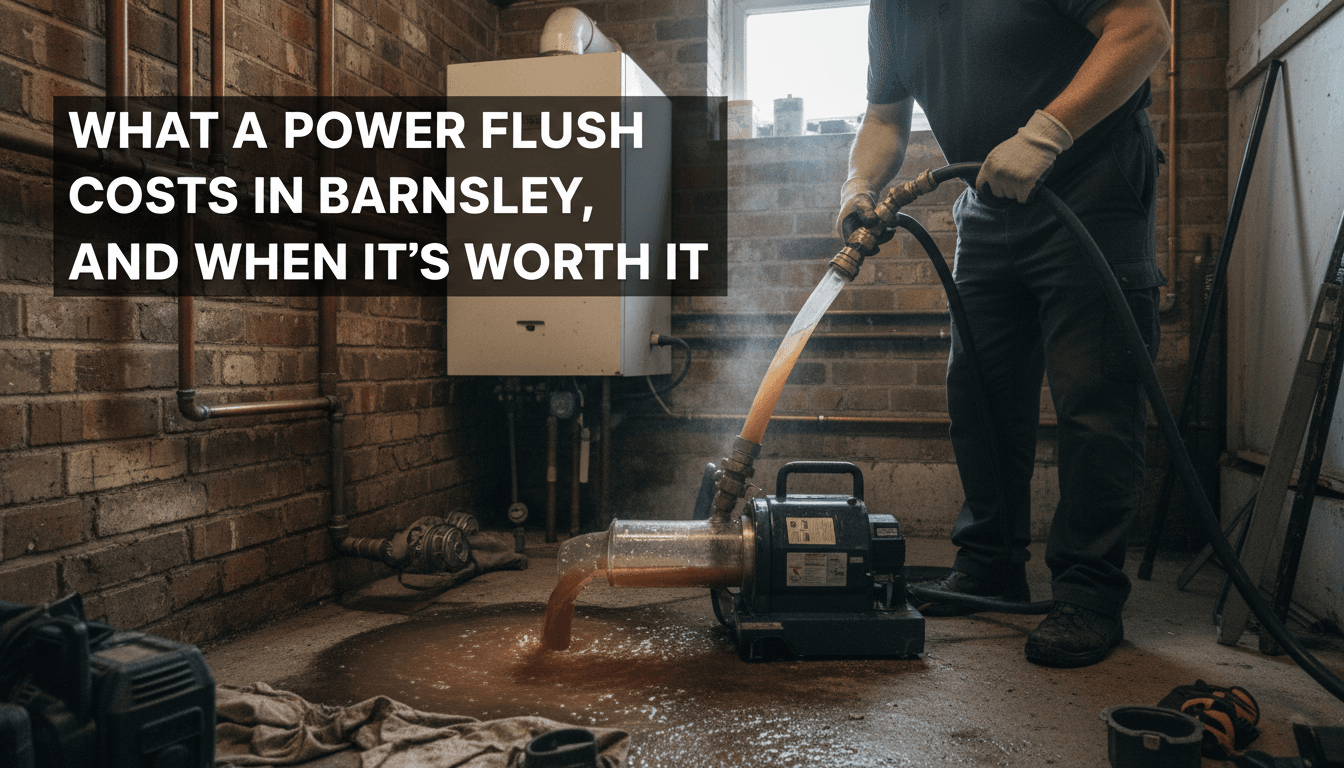
A power flush connects a pumping rig into the circuit and drives water mixed with a cleaning chemical round the system at high flow. The chemical loosens the deposits and the flow carries them out to be dumped, instead of just stirring them up to settle somewhere new. Each radiator is then cleaned on its own so it gets the full force of the rig.
Alpha, one of the two manufacturers we're approved installers for, describes the same approach in its advice on looking after your heating system: a machine that moves water through the pipes quickly, often helped along by a chemical cleaner.
What does a power flush cost in Barnsley?
These are our published prices. They're "from" figures because the size and condition of a system genuinely change how long the job takes.
| Job | Price | What's included |
|---|---|---|
| Full power flush, whole system | From £495 inc. VAT | Chemical flush of every radiator individually, new corrosion inhibitor, magnetic filter, flush certificate |
| Power flush, rural property | From £550 inc. VAT | The same job on the bigger systems typical of rural detached homes |
| Replacing a radiator that can't be saved (labour only) | From £120, then £80 per extra radiator on the same visit | Like-for-like swap, with you supplying the radiator or us quoting one in |
You'll have the exact figure in writing before any work starts. Nobody should find out what a job costs when the invoice arrives.
What pushes the price up or down
- How many radiators you have. Every one gets flushed separately, so a two-bed flat and a five-bed detached house are very different days.
- How dirty the system is. Light contamination clears quickly. A system that's been left alone for decades takes longer to run clean.
- Microbore pipework. The narrow pipes in some older homes can be flushed, but they need more time and more patience.
- Rural and larger properties. That's the reason our Penistone area price starts higher.
One recent job shows how far it can stretch. A farmhouse in Cawthorne had 14 radiators on a heavily sludged system. It took two days on the rig, isolating and cleaning each radiator in turn, before we fitted an Adey MagnaClean Pro2 filter, refreshed the inhibitor and issued the certificate. It's listed with our other recent jobs on the Penistone and surrounding villages page.
What should a proper power flush include?
This matters more than the headline price. Plenty of systems we look at were supposedly flushed years ago, and what actually happened was a drain, a refill and a dose of inhibitor. That isn't a power flush, and it won't move sludge that's packed into your radiators.
When you're comparing quotes, look for all of these in writing:
- Testing before the quote. We carry out a magnet test on the return pipe, an infrared scan of each radiator and a water sample analysis. If your system doesn't need flushing, we'll say so.
- A pumped rig with a cleaning chemical, rather than a gravity drain.
- Radiators flushed one by one, not the whole system in a single pass.
- Fresh corrosion inhibitor once the water runs clear.
- A magnetic filter on the return pipe to trap anything that breaks loose later.
- A flush certificate to keep with your boiler paperwork.
The benchmark for all of this is BS 7593, the British Standards code of practice for preparing, commissioning and maintaining the water in domestic heating systems. It deals with cleaning and flushing, treating the water against scale and corrosion, and in-line filters.
Alpha's guidance sums up what the standard expects once a system is clean: an in-line filter as a must, the water's cleanliness and inhibitor level checked each year, and either a full inhibitor re-dose or a full water test every five years.
Signs your heating system needs a power flush
No single sign proves it, but two or three together are a strong hint:
- Radiators that stay cool along the lower half even after you've bled them
- Some rooms warming up nicely while others lag behind
- Dark or black water coming out when you bleed a radiator
- A kettling or rumbling noise from the boiler
- The house taking noticeably longer to warm up than it used to
- A circulating pump that's failed more than once
Around Barnsley, we see this most in the older terraces across S70 and S73, where pipework and steel radiators have been shedding rust into the water for decades. The pattern is usually patchy radiators, a boiler that's grown noisy and pumps that don't last.
Sludge doesn't stay in the radiators, either. On a combi, it can clog the small plate heat exchanger that heats your tap water, which is one of the faults in our guide to having no hot water while the heating still works.
When a power flush won't fix the problem
This is the bit a pushy salesman would skip. Lots of heating complaints look like sludge and turn out to be something else.
- Cool at the top, warm lower down. That's trapped air. Bleeding the radiator fixes it, and a radiator key costs pennies.
- Upstairs cold while downstairs roasts. Often the system simply needs balancing, which means setting the lockshield valves so water reaches the furthest radiators. Sometimes sludge plays a part as well, and that's exactly what testing shows.
- Limescale inside the boiler. Hard water leaves scale on the boiler's heat exchanger, and a magnetic filter can't catch it. The north of the Barnsley borough has moderately hard water, and the answer there is regular servicing and keeping the water treatment right, not a flush.
- A boiler that's already on its way out. Flushing the system now and replacing the boiler next year can mean paying for the cleaning twice. There's more on that below.
Can a power flush cause leaks?
It can uncover them. A properly run flush shouldn't harm a system that's in sound condition. What it can do is wash away sludge that was plugging a pinhole in a radiator that has already rusted through.
That radiator was heading for a leak whatever happened, and it's far better it lets go with an engineer in the room than on a Sunday evening.
Getting a new boiler? Don't pay for a flush separately
If you're replacing your boiler, cleaning the system should already be in the installation price. With us it is. Every new boiler installation we quote includes a power flush or a chemical flush, whichever suits your system, plus a magnetic filter. It's not an add-on, so check that any quote you're comparing includes the same.
There's a solid reason it comes as standard. Connect a brand new boiler to a system full of sludge and the dirt goes straight into its internal parts. Alpha states plainly in its FAQ on what the boiler guarantee does and doesn't cover that rust sludge from the system getting into a new boiler's components voids the warranty.
So if a new boiler is on the cards in the next year or so, talk to us before booking a standalone flush. That money may be better spent as part of the install.
Keeping the system clean afterwards
A flush gives you a clean start, but it doesn't stop corrosion for good. What keeps the water clean is the magnetic filter trapping debris before it reaches the boiler, plus a yearly look at how things are going.
That yearly look happens at your service. Opening the filter shows how much it has collected since the last visit, and it's one of the items in our rundown of what we check during an annual boiler service. A nearly empty filter is good news. One that's packed with black sludge a year after a flush tells us something else is wrong, and it's much better to catch that early.
Is a power flush worth it?
When sludge is genuinely the cause, yes, and the cost of a power flush buys you more than clean radiators. Clean water carries heat round the house properly, the pump and the boiler's heat exchanger stop grinding through grit, and the new filter stops the build-up coming straight back.
When the real problem is air, balancing, limescale or a boiler that's about to be replaced, no. That's why a power flush is never quoted until the system has been tested.
If your radiators are patchy or your boiler has started sounding unhappy, get in touch for a system check or ring 01226 885022. Either Adam or I will pick up, one of us will come out to test the system, and you'll only get a written price for a power flush if it's actually the fix.
Frequently asked questions
How much should I expect to pay for a power flush?
With us, a whole-system power flush starts from £495 including VAT, or from £550 for larger rural homes around Penistone. That includes a chemical flush of each radiator, fresh inhibitor, a magnetic filter and a flush certificate. We test the system first and confirm the exact price in writing.
How long does a power flush take?
It depends mostly on how many radiators you have and how much sludge is inside them, because each radiator is flushed on its own. Microbore pipework needs longer too. A heavily sludged 14-radiator farmhouse near Penistone took us two days. We give you a realistic timescale once we've tested the system.
Can a power flush damage my radiators?
A properly run flush shouldn't harm a system that's in sound condition. It can expose a radiator that has already corroded through, by clearing sludge that was blocking a pinhole. That radiator was close to leaking anyway. Replacing one with us starts from £120, labour only.
Do I need a power flush when I get a new boiler?
The system should always be cleaned when a new boiler goes in. With us that is already in the installation price, as a power flush or chemical flush plus a magnetic filter. Alpha says rust sludge reaching a new boiler's components voids its warranty, so it's not a step worth skipping.
How do I know if my radiators need a power flush?
Typical signs are radiators that stay cool lower down after bleeding, dark water when you bleed them, rooms that heat unevenly, a kettling boiler and a pump that keeps failing. Several together point strongly to sludge. An engineer can confirm it with a magnet test, a radiator scan and a water sample.
How often should a central heating system be power flushed?
There's no fixed interval. Once a system is clean, BS 7593 expects an in-line filter, a yearly check of the water and inhibitor, and either a full inhibitor re-dose or a full water test every five years. Kept that way, a system only needs flushing again if the annual check shows sludge returning.
Get more like this
One honest email a month.
Boiler tips, heat pump advice, and answers to the questions our customers actually ask.
Heating not quite right?