You've turned the thermostat up, then up again, and the radiators are still cold to the touch. Meanwhile the hot tap in the kitchen is running as hot as it ever did. When the heating's not working but the hot water is fine, that's actually a more useful clue than it feels like right now. The fault usually sits in one of two places: whatever is meant to ask the boiler for heat (the thermostat, the timer or your smart controls), or the valve that sends the heat out to your radiators rather than to your hot water.
The first lot you can usually check yourself with a cup of tea in your hand. The second needs an engineer, but feeling your radiators will tell you which one you're dealing with.
If you smell gas, forget the radiators for now. If the meter is easy and safe to get to, switch the gas off there, then open the windows, leave every switch alone, don't light anything, and once you're outside, call 0800 111 999.
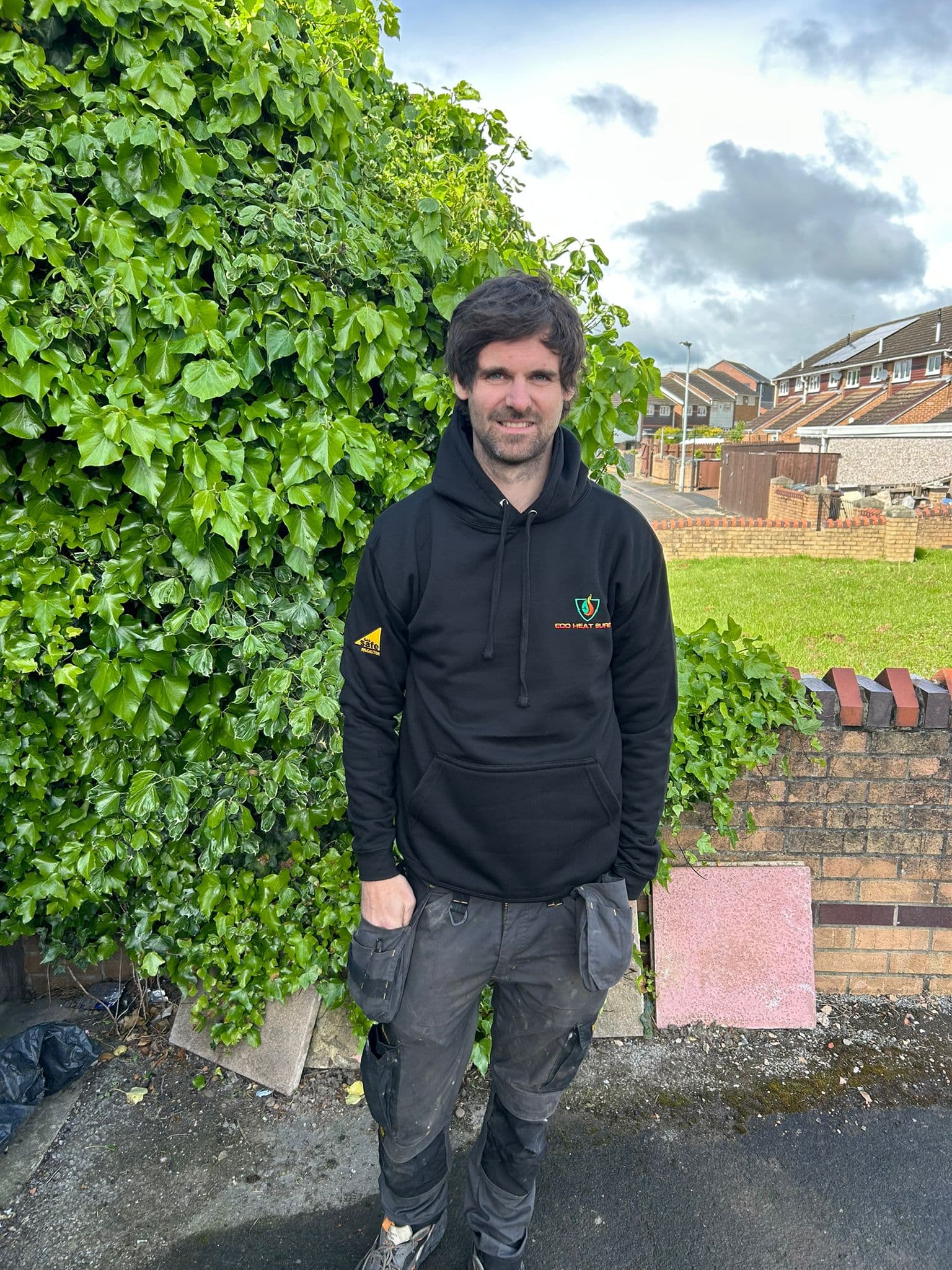
I'm Danny, and I'd much rather you rang knowing what you've already ruled out than paid for a visit to turn a thermostat up. So here's how I'd go about it, cheapest checks first.
Treat your hot tap as a free test
On a combi, hot water at the tap means the boiler has had gas, power and a flame in the last few minutes, so you can cross all three off your list. With a hot water tank it's a weaker clue, because a tank holds its heat for hours, but if the boiler heated it this morning, you know it had all three then.
That leaves the heating side of things, and a much shorter list. Either nothing is asking for heat, the request is going missing on its way to the boiler, or the boiler fires and the heat ends up in the wrong place. I'd work through them in that order, because the first one costs you nothing to put right.
One catch if you've got a hot water tank. Look for an immersion heater switch in or near the airing cupboard. If it's on, that electric element may have been heating your water all along, so you can't be sure the boiler's firing at all. Switch the immersion off, run a bit of hot water off, and see whether the boiler heats the tank back up on its own at the next hot water time. If it doesn't, the boiler isn't firing at all, and the checks for a boiler that won't fire will get you further than I can here.
Start with whatever asks for the heat
This is where the free fixes live, so it's worth ten minutes before you pick up the phone.
The room thermostat
Turn it up a few degrees above what the room actually feels like and give it a couple of minutes. You should hear the boiler fire up. If your thermostat runs on batteries, put fresh ones in, because a wireless one with flat batteries can simply stop talking to the boiler, and the little battery symbol on its screen is very easy to miss.
It's also worth thinking about where it lives. A thermostat in a hallway that catches the afternoon sun, or on a kitchen wall near the oven, can decide the whole house is warm enough while the bedrooms are freezing. If yours is in a spot like that, try turning it right up as a test and see whether the radiators come to life.
The timer or programmer
If your heating runs off a programmer, check the heating side is switched on, or set to come on at this time of day. If you've had a power cut lately, look at the clock as well, because a programmer that thinks it's four in the morning will happily keep the heating off all evening. Where the heating and hot water have their own settings, as they usually do with a tank, one can quite easily be on while the other has been knocked to off.
The heating setting on the boiler
Most combis have a heating dial or button on the front, separate from the hot water one, and plenty of people turn the heating side down or off for the summer and then forget about it. Have a look at yours. If the heating temperature is at its lowest setting or switched off, turn it up and wait a few minutes. The manual will tell you which symbol is which if it isn't obvious.
Smart controls
Smart thermostats give the heating a few extra ways to stay off without anything actually being broken. Check the app isn't in away or holiday mode, that nobody has changed the schedule, and that the thermostat still shows as connected. Many of them have a small receiver box near the boiler with a status light; if that light is showing a problem, switching the receiver off and on again often gets the two talking.
Is every radiator cold, or just some?
Have a quick walk round the house with your hand on each radiator, because the answer changes where you look next.
| What you find | Likely cause | Next step |
|---|---|---|
| Every radiator cold, and the boiler stays silent when you turn the thermostat up | The heating isn't being asked for, or the request isn't reaching the boiler | Go back over the controls above, then give us a ring |
| Every radiator cold, but you can hear the boiler fire and run | The heat isn't being sent to the radiators: often a stuck diverter valve if it's a combi, or a zone valve on a system with a cylinder | Read the next two sections |
| Some radiators warm, others cold | A stuck radiator valve, trapped air, or the system wanting balancing | See our guide to patchy, half-warm radiators |
| Warm at the bottom, cold across the top | Air trapped in that radiator | Bleeding it usually sorts it (same guide) |
A word about radiators that haven't been touched all summer. Most have a thermostatic valve on one side, the head with the numbers on it, and the little pin inside can stick shut after months of sitting still. If one radiator stays cold while the rest warm up, turn its valve right up to the top number and back down a few times. If that doesn't free it, an engineer can sort it quickly, and your boiler's not to blame.
On a combi, it's often the diverter valve
A combi has no hot water tank. It heats mains water the moment a tap opens, and inside the boiler a diverter valve decides where the heat goes. It flips over to the taps every time somebody washes their hands and back to the radiators afterwards, so after years of that it's one of the parts that wears.
When it sticks on the hot water side, you get hot taps and cold radiators. Viessmann's guide to diverter valves lists exactly that as one of the tell-tale signs, along with lukewarm water from the hot tap and needing to put the heating on before the hot water will come through. So if your radiators are cold while the boiler is clearly running, this is the first thing I'd suspect.
Please don't go after it yourself, because the valve lives inside the sealed casing, next to the gas and the electrics. Sometimes it has just stuck and can be cleaned and refitted, and sometimes the motor or the valve needs replacing. Once we've found it, a diverter valve swap usually takes us somewhere between 90 minutes and two hours. On a boiler with plenty of years left in it, that's well worth doing, and if yours is getting on and keeps letting you down, I'll tell you straight whether it's worth the money.
With a hot water cylinder, look at the zone valves
If your hot water lives in a tank, normally tucked away in an airing cupboard, the heat gets steered by motorised valves on the pipework nearby. Some homes have two of them, one for the heating and one for the hot water, while others have a single valve with three pipes coming off it that handles both.
When the motor on the heating side gives up, the hot water side carries on, so the cylinder stays nice and hot while the radiators get nothing. Turn the thermostat up and stand near the airing cupboard for a minute: you'll often hear a faint hum or a click from the valve as it opens. If you hear nothing at all, mention it on the phone, because it helps us bring the right part with us.
These valves are wired into your heating controls, so changing one needs an engineer. It's usually a straightforward job, though, and once it's done your heating should behave exactly as it did before.
Checks you can safely make before you call
If you'd rather just run down a list before you ring, here it is. None of it needs a tool or means taking anything apart:
- Turn the room thermostat a few degrees above the room temperature, and fit new batteries if it takes them.
- Make sure the programmer or app has the heating switched on now, with the right time and day showing.
- Check the boiler's own heating dial hasn't been turned down or switched off.
- Feel every radiator, and turn up any radiator valve that's been turned down low.
- Jot down any fault code showing on the display, plus the boiler's make and model.
Anything past that list means taking panels off or touching wiring, and that's for an engineer. Whoever works on your gas boiler has to be Gas Safe registered. You can ask to see their Gas Safe ID card and check the licence number on it against the Gas Safe Register.
When to stop and leave it to us
If a fault code keeps coming back after you reset the boiler, stop pressing the button, because a boiler that locks itself out is usually protecting something. The same goes if you find water under the boiler or around the cylinder, or if it fires up and starts banging or whistling.
If nothing fires at all, not even for hot water, you've got a different fault on your hands, and the won't-fire checks I linked earlier will serve you better. And if yours is the mirror image, warm radiators and cold taps, what to do when the taps run cold is the one you want.
What happens when you ring us
It's Adam or me who answers the phone. If it sounds like something you can sort yourself, we'll say so there and then. If it needs a visit, we'll agree a price for coming out before anyone drives over, and that comes off the bill if we go ahead with the repair. Once we've found what's failed, we'll put the cost of fixing it in writing, and whether we do it is entirely up to you.
How soon we can be with you depends on where you live. In Barnsley we try to be with you the same day, anywhere from S70 to S75. Penistone, Cudworth and Hoyland are usually the same day or the next, Sheffield and Rotherham get next-day priority, and Doncaster and Wakefield are within 48 hours. Winter weekends are when we're busiest and those times can stretch, so ring early if you can. Our page for heating engineers in Barnsley shows which villages and postcodes are closest to us.
If the radiators are still cold after all that, ring me on 01226 885022 and tell me what the boiler's doing. You can read how our boiler repair service works first if you'd rather.
Frequently asked questions
Is it an emergency if the heating's off but I still have hot water?
Not usually. Cold radiators with hot taps can wait for an engineer, and shutting the internal doors helps one room hold its warmth meanwhile. If someone elderly, very young or poorly is at home, tell us when you ring, because we put vulnerable households first. A gas smell is different. If you can safely reach the meter, turn it off there, then leave the switches alone, get outside and ring 0800 111 999.
How do I tell if the immersion is doing the work instead of the boiler?
Switch the immersion off at its switch in or near the airing cupboard and run some hot water off, so the tank isn't still full from earlier. Then see whether it heats back up at the next hot water time on your programmer. If it does, the boiler's heating your water and the fault is on the heating side. If it stays cold, the boiler isn't firing, which is a different problem to chase.
Should I bleed my radiators if they're all cold?
Bleeding lets out trapped air, which is what makes a radiator cold across the top while the bottom stays warm. If every radiator is cold from top to bottom, bleeding them won't help, because the heat isn't reaching them at all. Check your controls first, then get an engineer to look at the valves.
Get more like this
One honest email a month.
Boiler tips, heat pump advice, and answers to the questions our customers actually ask.