If you let out a property anywhere in South Yorkshire, a CP12 is not paperwork you can put off. The law is clear: every year you must have the gas appliances and flues you provide checked by a Gas Safe registered engineer, give your tenant a copy of the record, and hold onto it.
Miss it and you are not just risking a fine, you are risking your tenants' safety and your own position as a landlord. Here is exactly what a CP12 is, what the law asks of you, and how to stay on the right side of it without the stress.
I am Danny, co-founder at Eco Heat Surge, and we carry out landlord gas safety checks for property owners right across South Yorkshire. This is the guide I wish more landlords had read before their certificate lapsed.
What is a CP12, exactly?
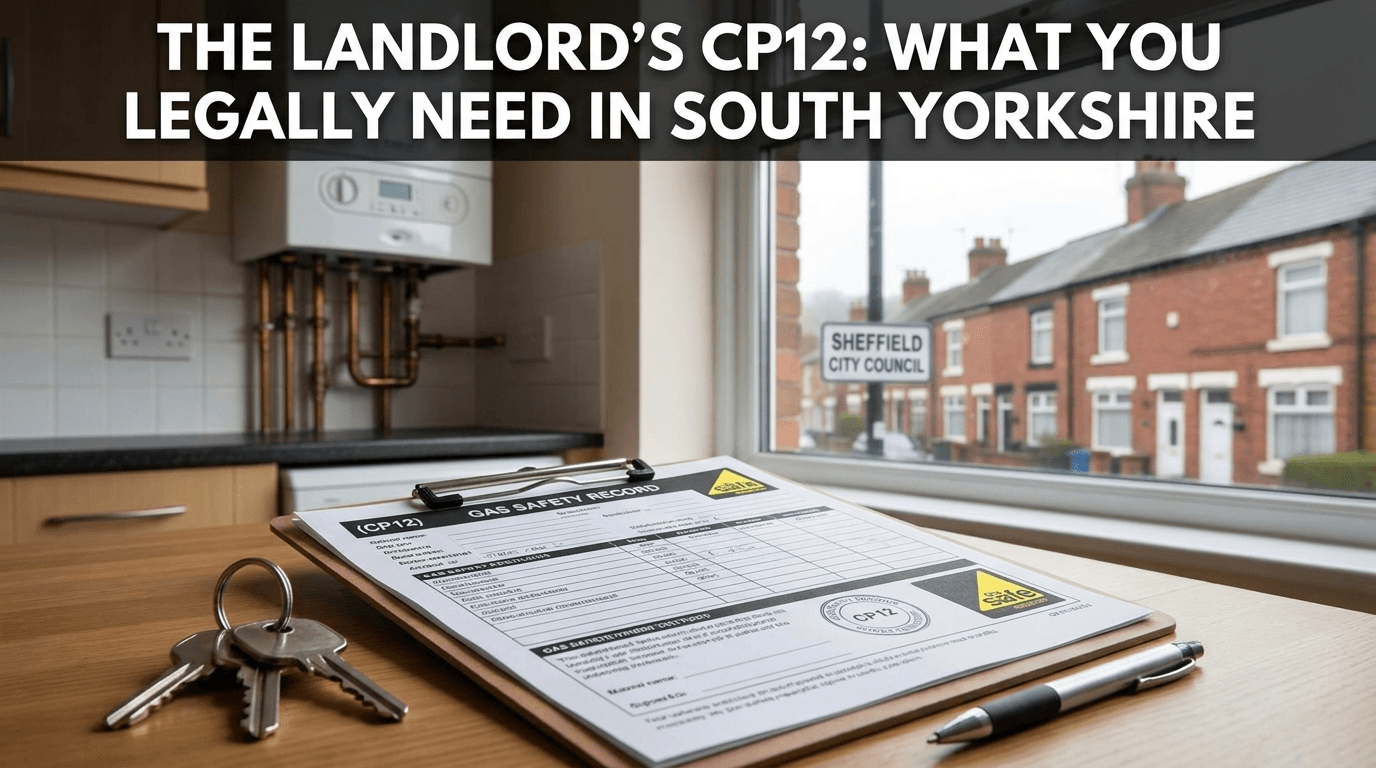
A CP12 is the common name for the Landlord Gas Safety Record. The name is a hangover from an old industry form code, but everyone in the trade still calls it a CP12, so the two terms mean the same thing.
It is the document a Gas Safe registered engineer issues after inspecting the gas appliances, flues and associated pipework that you, the landlord, provide in the property. The record confirms each appliance has been checked and notes anything unsafe. It is proof that you have met your annual legal duty, and it is what your tenant is entitled to see.
Worth being clear on one point: the CP12 covers the gas equipment you supply as the landlord. A gas cooker the tenant brought with them is a slightly different matter, and a good engineer will talk you through where the lines sit.
What the law actually requires of you
Your duties come from the Gas Safety (Installation and Use) Regulations 1998. In plain terms, as a landlord you must:
- Have a gas safety check carried out every 12 months. It must be done within 12 months of installing a new appliance or flue, and annually after that.
- Use a Gas Safe registered engineer. Only an engineer on the Gas Safe Register can legally carry out the check and issue the record. You can confirm anyone's registration on the Gas Safe Register.
- Give your tenant a copy of the record. Existing tenants must receive it within 28 days of the check being completed. Any new tenant must get a copy before they move in.
- Keep your records for two years. Hold onto each CP12 for at least two years, so you can always show a clear history.
These are legal obligations, not best-practice suggestions, and the Health and Safety Executive enforces them. You can read the full detail on the HSE landlord gas safety pages.
What the engineer actually checks
A CP12 is more than a quick glance at the boiler. On each gas appliance you provide, the engineer works through the things that keep it safe, including:
- Correct operation. That the appliance is working as it should and burning gas properly.
- Gas tightness. That there are no leaks anywhere on the gas system serving the appliance.
- The flue or chimney. That it is clearing the products of combustion safely to the outside, rather than spilling them back into the room.
- Ventilation. That the appliance has the air supply it needs to burn cleanly.
- Safety devices. That any built-in safety cut-outs are present and working.
If everything passes, the engineer records it on the CP12 and you have your proof of compliance for the year. If something is not right, they will tell you there and then and explain your options.
What happens if an appliance fails the check
Sometimes an appliance is not safe to keep using, and a good engineer will not simply sign it off. Depending on the fault, they may record it as at risk or as immediately dangerous. With your permission they can turn off and label an unsafe appliance so it is not used until it has been put right, and they will issue a warning notice setting out what was found.
None of this is an engineer being awkward. It is the system working exactly as intended, catching a problem before it reaches your tenant. Once the fault is repaired and rechecked, you are back to a clean record.
A CP12 is not a boiler service
This one catches a lot of landlords out, so it is worth saying plainly: a gas safety check and a boiler service are two different things.
A CP12 confirms the appliances are safe to use right now. A service is about maintenance, keeping the boiler running efficiently and heading off breakdowns. The HSE is explicit that you should not assume a service covers everything a safety check does, and you should not assume a safety check counts as proper maintenance. Ideally your boiler gets both, and it often makes sense to have them done in the same visit. Our guide on what an annual service actually checks shows exactly where the two jobs differ, and you can book a boiler service alongside your CP12 if it is due.
When to book it, and the two-month rule
The sensible time to book is before your current certificate is close to running out, not the week it expires. Leave it to the last minute and you are relying on an engineer being free at exactly the right moment.
There is a useful bit of flexibility built into the rules. You are allowed to have the annual check carried out up to two months before the deadline while keeping your original expiry date. In practice that means you can renew early, tidy up your dates, and never lose the anniversary you have been working to. It is the simplest way to make sure a certificate never lapses.
Access, and where your tenant fits in
A question that comes up a lot: what if the tenant will not let the engineer in? The duty to arrange the annual check sits with you, the landlord, but you are expected to take reasonable steps to gain access, not to force entry. In practice that means giving proper notice, offering sensible appointment times, and keeping a written record of your attempts if a tenant repeatedly refuses.
That paper trail matters. If access genuinely proved impossible despite real effort, being able to show the letters, texts and dates you tried demonstrates you took your responsibility seriously. Most tenants cooperate once they understand the check is there for their own safety, so a friendly explanation usually solves it long before it becomes a problem.
What happens if you do not have a valid CP12?
Letting a property without a current gas safety record is breaking the law, and the consequences are serious. Non-compliance can lead to enforcement action from the HSE, significant fines and, in the worst cases, prosecution. It can also invalidate your landlord insurance, leaving you exposed if something goes wrong.
The bigger point sits behind all of that. An unchecked gas appliance can leak carbon monoxide, which is colourless, odourless and genuinely dangerous. The annual check exists to catch exactly that kind of hidden fault before it harms the people living in your property. Compliance and tenant safety are really the same thing here.
Do not forget smoke and carbon monoxide alarms
Gas safety is one duty, but it is not the only one. Landlords also have separate responsibilities for smoke and carbon monoxide alarms, generally a smoke alarm on every storey and a carbon monoxide alarm in rooms with certain fuel-burning appliances. The precise requirements sit under their own regulations and have been updated in recent years, so check the current position on the government's landlord safety responsibilities page and get your engineer to advise while they are on site.
Getting your CP12 sorted in South Yorkshire
None of this needs to be a headache. A landlord gas safety check is a straightforward, affordable job when it is booked in good time, and doing it properly protects your tenants, your property and your peace of mind.
We carry out CP12 checks for landlords across Barnsley, Sheffield, Rotherham, Doncaster and Wakefield, and we can combine the safety check with a service in a single visit to save you a second appointment. Take a look at our gas safety check service, see the areas we cover across South Yorkshire, or get in touch to book your CP12 before your current one runs out.
Frequently asked questions
What is a CP12 certificate?
A CP12 is the everyday name for the Landlord Gas Safety Record. It is the document a Gas Safe registered engineer issues after checking the gas appliances and flues you provide in a rented property. It confirms they are safe to use and is proof you have met your annual legal duty as a landlord.
How often do landlords need a gas safety check?
Every 12 months. The check must be carried out within a year of a new appliance or flue being installed, and annually after that, by a Gas Safe registered engineer. You can renew up to two months before the deadline while keeping your original expiry date, which helps you avoid any gap.
Is a CP12 the same as a boiler service?
No. A CP12 confirms your gas appliances are safe to use right now, while a service is about maintenance and efficiency. The HSE is clear that one does not automatically cover the other. Many landlords sensibly have both done in the same visit, but they remain two separate jobs.
How long do I have to give my tenant the certificate?
You must give existing tenants a copy of the gas safety record within 28 days of the check being completed. Any new tenant must receive a copy before they move in. You also need to keep your own copy of each record for at least two years.
What happens if I do not have a valid CP12?
Letting a property without a current gas safety record breaks the law. It can lead to enforcement action from the HSE, significant fines and even prosecution, and it may invalidate your landlord insurance. More importantly, it leaves tenants exposed to faults like carbon monoxide that the check is designed to catch.
What if my tenant will not let the engineer in?
The duty to arrange the check stays with you, but you are expected to take reasonable steps to gain access, not to force entry. Give proper notice, offer sensible times, and keep a written record of your attempts. That record protects you if access genuinely proves impossible despite real effort.
Get more like this
One honest email a month.
Boiler tips, heat pump advice, and answers to the questions our customers actually ask.